
What Is Uninsured and Underinsured Motorist Coverage?
Introduction
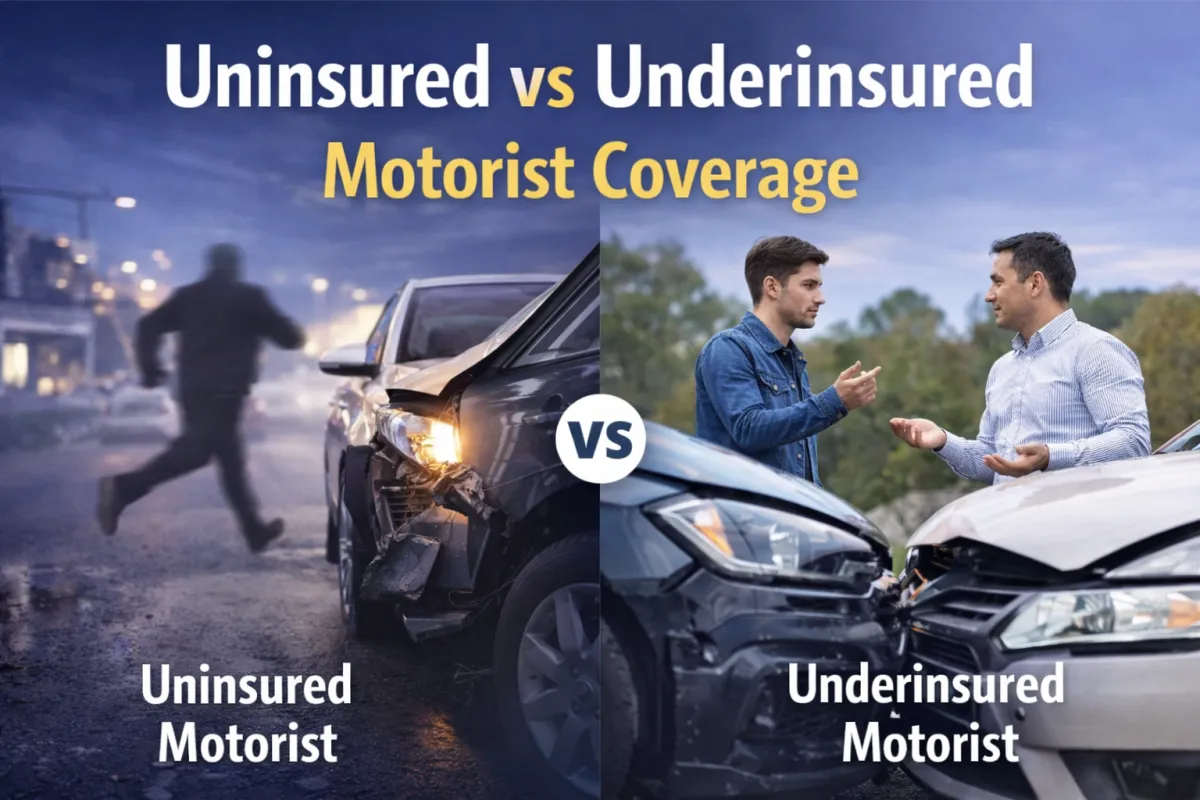
Uninsured and underinsured motorist coverage (often abbreviated as UM and UIM) is designed to protect you if you are involved in an accident caused by a driver who either has no insurance or does not carry enough insurance to fully cover the damages.
Although most states require drivers to carry liability insurance, not every driver complies with the law. Even when drivers are insured, minimum liability limits may not be sufficient to cover serious injuries or extensive property damage. Uninsured and underinsured motorist coverage helps address this gap.
Understanding how this coverage works — and when it may apply — can help drivers evaluate their overall financial protection strategy.
What Is Uninsured Motorist Coverage?
Uninsured motorist (UM) coverage applies when the at-fault driver has no liability insurance. This situation may arise when:
A driver operates a vehicle without required coverage.
An at-fault driver’s policy has lapsed or been canceled.
A hit-and-run accident occurs and the responsible driver cannot be identified.
UM coverage is typically divided into two categories:
Uninsured Motorist Bodily Injury (UMBI)
Uninsured Motorist Property Damage (UMPD)
Not all states offer both types, and requirements vary.
What Does Uninsured Motorist Bodily Injury Cover?
Uninsured Motorist Bodily Injury (UMBI) generally helps pay for:
Medical expenses
Lost wages
Rehabilitation costs
Pain and suffering (subject to policy terms and state law)
Funeral expenses in severe cases
UMBI protects you and, in many cases, passengers in your vehicle.
What Does Uninsured Motorist Property Damage Cover?
Uninsured Motorist Property Damage (UMPD) helps pay for repairs to your vehicle when an uninsured driver causes damage. However, availability varies by state.
In some states, collision coverage may serve a similar purpose for vehicle damage, though it requires payment of a deductible. You can learn more about collision coverage in Liability vs Collision vs Comprehensive Explained.
What Is Underinsured Motorist Coverage?
Underinsured motorist (UIM) coverage applies when the at-fault driver has liability insurance, but their policy limits are not high enough to cover the full extent of damages.
For example:
The at-fault driver carries $25,000 in bodily injury liability.
Your medical expenses total $75,000.
After their insurer pays $25,000, UIM coverage may help cover the remaining eligible costs, up to your policy limits.
UIM coverage is particularly relevant in states with low minimum liability requirements.
For more context on minimum limits, see Understanding State Minimum Auto Insurance Requirements.
When Is UM/UIM Coverage Required?
Some states require drivers to carry uninsured motorist coverage. Others require insurers to offer it, but drivers may decline it in writing. Underinsured motorist coverage requirements also vary by state.
Because regulations differ, drivers should review state-specific requirements or consult official state insurance department resources.
How UM/UIM Limits Work
UM and UIM coverage limits are often structured similarly to liability limits, expressed as:
Per-person bodily injury limit
Per-accident bodily injury limit
In some cases, UM/UIM limits may mirror your liability limits. Drivers often choose matching limits to ensure consistent protection.
For example, if you carry $100,000/$300,000 in liability coverage, you may choose similar UM/UIM limits.
Why UM/UIM Coverage May Be Important
Even though insurance laws exist, uninsured and underinsured drivers remain on the road. Medical expenses, vehicle repair costs, and lost wages can escalate quickly after a serious accident.
Without UM/UIM coverage, you may need to rely on:
Your own health insurance
Personal savings
Legal action against the at-fault driver (which may not result in full recovery)
UM/UIM coverage provides an additional layer of financial protection in situations where the responsible party cannot fully compensate you.
UM/UIM and Deductibles
Uninsured motorist bodily injury coverage generally does not involve a deductible. However, uninsured motorist property damage coverage may include a deductible in some states.
If collision coverage is used instead to repair your vehicle, your collision deductible would typically apply. Details about deductibles are explained in How Auto Insurance Deductibles Work.
Stacking Coverage (Where Permitted)
In certain states, policies may allow “stacking” of UM/UIM coverage. Stacking can increase the total available coverage limit by combining limits across multiple vehicles or policies.
For example:
Two vehicles each carry $50,000 in UM coverage.
Stacking may allow up to $100,000 in available coverage.
Stacking rules vary by state and insurer, and not all policies permit it.
Interaction With Other Coverages
UM/UIM coverage primarily addresses bodily injury costs. Property damage may be covered by:
Uninsured motorist property damage (where available)
Collision coverage
The at-fault driver’s liability coverage (if insured)
Full coverage policies often include collision and comprehensive coverage for vehicle damage. For more information, see What Is Full Coverage Auto Insurance?
Financial Risk Considerations
Drivers evaluating UM/UIM coverage may consider:
The prevalence of uninsured drivers in their state
State minimum liability limits
Personal health insurance coverage
Financial ability to absorb large medical costs
Because medical expenses can escalate quickly, some drivers choose UM/UIM limits equal to or higher than their liability limits.
Final Thoughts
Uninsured and underinsured motorist coverage is designed to protect you when other drivers fail to carry sufficient insurance. While state laws vary regarding requirements, this coverage can play an important role in reducing financial exposure after serious accidents.
Understanding how UM/UIM coverage works — including limits, deductibles, and state-specific rules — helps ensure your policy aligns with your broader protection strategy.
Related guides:
