
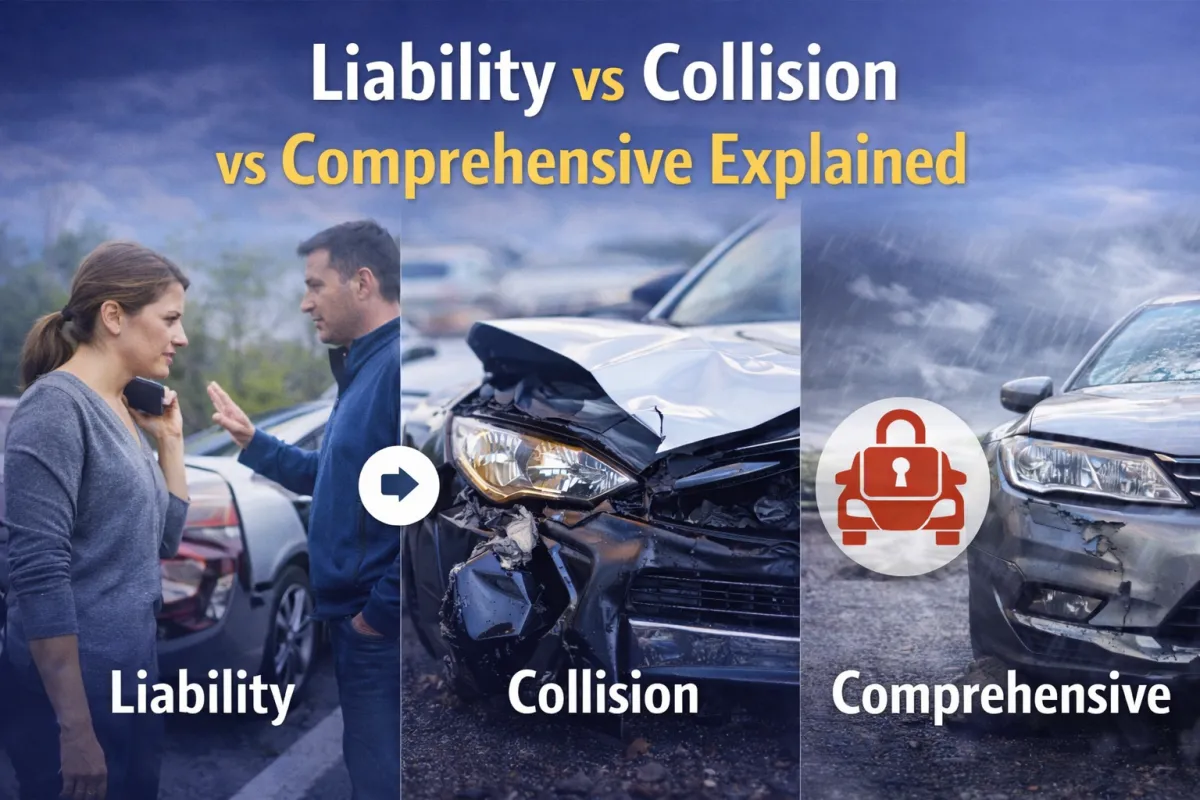
Liability vs Collision vs Comprehensive Auto Insurance Explained
Introduction
Auto insurance policies are built from several coverage components, but three core types form the foundation of most policies: liability, collision, and comprehensive coverage. Each serves a distinct purpose. Liability coverage protects others when you are at fault. Collision and comprehensive coverage protect your own vehicle under different circumstances.
Understanding how these coverages differ — and how they work together — is essential when evaluating how much financial protection your policy provides.
Liability Coverage
Liability insurance is required in most states and serves as the legal baseline for auto insurance. It protects you financially if you are responsible for injuries or property damage caused to others in an accident.
Liability coverage typically includes bodily injury liability and property damage liability. Bodily injury liability helps pay for medical expenses, rehabilitation costs, lost wages, and in some cases legal defense expenses for injured parties. Property damage liability helps pay for repairs to another person’s vehicle or other damaged property, such as buildings or fences.
Liability coverage does not pay for damage to your own vehicle. If you cause an accident and your car is damaged, repairs would not be covered under liability alone.
State minimum liability limits establish the lowest coverage drivers must carry, but those limits may not fully protect you in serious accidents. For more detail on required limits, see What Is Minimum Auto Insurance Coverage?
Collision Coverage
Collision coverage helps pay to repair or replace your vehicle if it is damaged in an accident, regardless of who is at fault. Covered incidents generally include collisions with another vehicle, single-car accidents such as hitting a guardrail, and rollovers.
Collision coverage is optional under most state laws but may be required by a lender if the vehicle is financed or leased. Because it applies to your own vehicle, it plays a different role than liability insurance.
Collision coverage is subject to a deductible. If your deductible is $500 and repair costs total $4,000, you would pay $500 and your insurer would pay the remaining $3,500, subject to policy terms. Deductible selection affects premium cost. Higher deductibles usually lower premiums but increase your out-of-pocket expense if a claim occurs. More on this topic is explained in How Auto Insurance Deductibles Work.
Comprehensive Coverage
Comprehensive coverage protects against damage caused by events other than collisions. It is sometimes called “other-than-collision” coverage. Covered events typically include theft, vandalism, fire, hail damage, flooding, falling objects, and animal collisions.
Like collision coverage, comprehensive insurance generally includes a deductible and pays based on the vehicle’s actual cash value at the time of loss. In regions prone to severe weather or higher theft rates, comprehensive coverage may be particularly relevant.
Although comprehensive coverage is optional under most state laws, lenders commonly require it when a vehicle is financed.
How the Three Coverages Differ
The primary difference between these coverages lies in what they protect.
Liability coverage protects other people and their property when you are at fault. Collision coverage protects your vehicle after an accident. Comprehensive coverage protects your vehicle from non-collision-related damage.
Liability coverage is legally required in most states. Collision and comprehensive coverage are generally optional unless required by a lender. Liability coverage typically does not include a deductible. Collision and comprehensive coverage almost always do.
Understanding these differences helps drivers evaluate their overall financial exposure.
How These Coverages Work Together
When liability, collision, and comprehensive coverage are combined in one policy, the result is commonly referred to as “full coverage.” While not a formal insurance term, this combination provides broader protection than liability alone.
Liability covers damages you cause to others. Collision addresses damage to your own vehicle resulting from accidents. Comprehensive addresses damage from non-collision events such as weather or theft.
For a more detailed discussion of this combined structure, see What Is Full Coverage Auto Insurance?
Practical Scenario Comparison
Consider how these coverages apply in real situations.
If you rear-end another vehicle and cause damage to both cars, your liability coverage would pay for the other driver’s vehicle repairs and injuries. Your collision coverage would pay for repairs to your vehicle, subject to your deductible.
If your vehicle is damaged in a hailstorm while parked, liability does not apply because no third party is involved. Collision does not apply because no collision occurred. Comprehensive coverage would address the damage.
If another driver hits your vehicle and is at fault, their liability insurance should pay for your repairs. If they are uninsured or lack sufficient limits, your uninsured or underinsured motorist coverage may apply if you carry it. Additional details are available in What Is Uninsured and Underinsured Motorist Coverage?
Financial Risk Considerations
Choosing coverage types involves assessing financial risk. A liability-only policy may have lower premiums but leaves you responsible for repairing or replacing your own vehicle after an accident.
Adding collision and comprehensive coverage increases premium costs but reduces potential out-of-pocket expenses following covered events. Vehicle value plays a key role in this decision. If the cost of maintaining collision and comprehensive coverage approaches the market value of the vehicle, some drivers reassess whether continuing those coverages is cost-effective.
However, removing those coverages means accepting full responsibility for repair or replacement costs.
Cost and Premium Impact
Premiums vary depending on driving history, vehicle type, location, coverage limits, and deductible choices. Adding collision and comprehensive coverage increases total premium cost compared to liability-only policies.
Deductible selection helps balance affordability and risk. Higher deductibles reduce premiums but increase financial responsibility during claims. Lower deductibles increase premiums but reduce out-of-pocket expenses after covered losses.
To better understand premium calculations, see What Factors Affect Your Auto Insurance Premium?
Final Thoughts
Liability, collision, and comprehensive coverage each serve distinct and complementary roles within an auto insurance policy. Liability protects others when you are at fault. Collision protects your vehicle after accidents. Comprehensive protects your vehicle from non-collision-related damage.
Understanding how these coverages differ — and how they interact — helps drivers design policies aligned with legal requirements and personal financial circumstances.
For additional context, review:
