
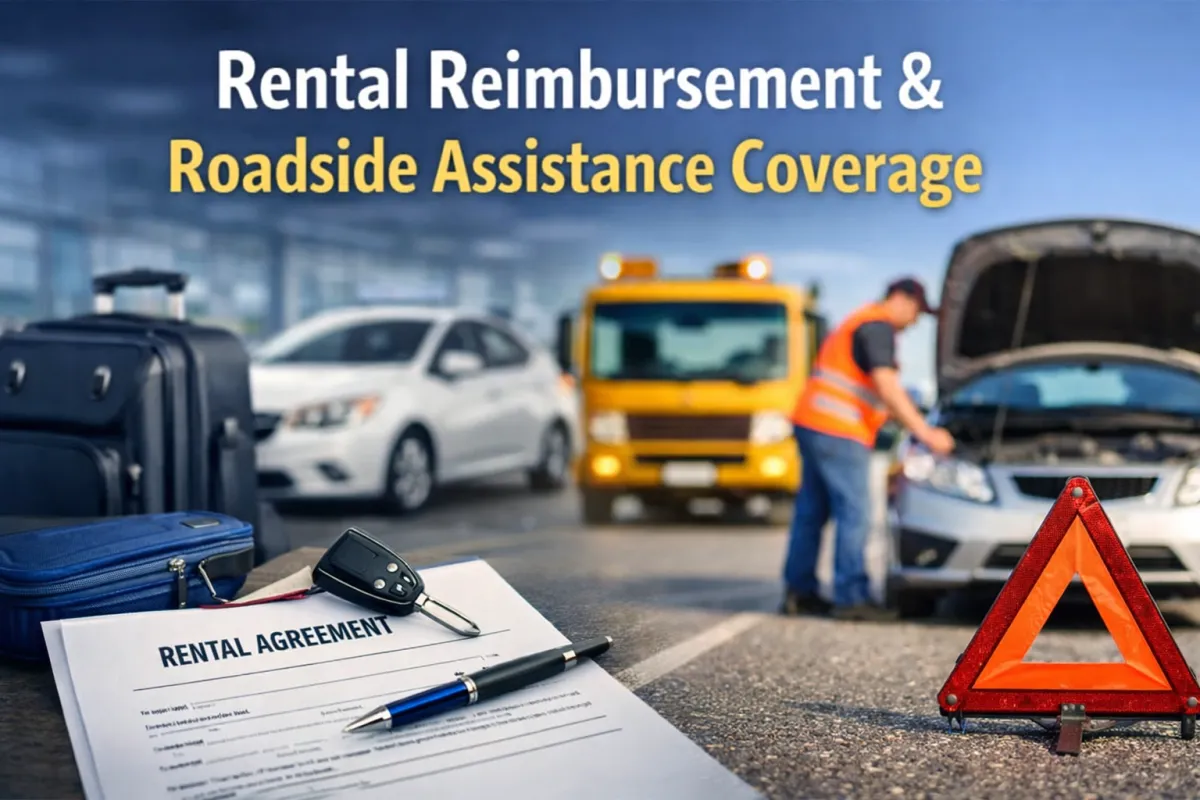
Rental Reimbursement and Roadside Assistance Coverage Explained
Introduction
In addition to core auto insurance coverages such as liability, collision, and comprehensive, many insurers offer optional add-ons designed to reduce inconvenience after a breakdown or accident. Two of the most common optional coverages are rental reimbursement and roadside assistance.
While these coverages do not affect liability protection or major claim payouts, they can provide practical support when your vehicle is temporarily unusable. Understanding how they work — and when they apply — can help you decide whether they align with your driving habits and risk preferences.
What Is Rental Reimbursement Coverage?
Rental reimbursement coverage helps pay for the cost of a rental vehicle while your insured car is being repaired due to a covered claim. It does not apply to routine maintenance or mechanical breakdowns unless the breakdown resulted from a covered loss.
Rental reimbursement typically applies when:
Your vehicle is damaged in a covered collision.
Your vehicle is damaged by a covered comprehensive event (such as hail or theft).
Repairs are underway and the vehicle cannot be safely driven.
This coverage is usually optional and may only be available if you carry collision and/or comprehensive coverage. For context on those coverages, see Liability vs Collision vs Comprehensive Explained.
How Rental Reimbursement Works
Rental reimbursement coverage generally includes:
A daily reimbursement limit (e.g., $30–$50 per day)
A maximum total payout limit (e.g., $900–$1,500 per claim)
A time limit, often expressed in number of days
For example:
Daily limit: $40 per day
Maximum payout: $1,200
Maximum rental duration: 30 days
If the rental cost exceeds your daily limit, you are responsible for the difference.
Rental reimbursement does not typically cover fuel, insurance purchased from the rental agency, or upgrades to larger vehicle classes unless specified.
When Rental Reimbursement Does Not Apply
Rental reimbursement generally does not apply when:
Your vehicle is in the shop for routine maintenance.
The breakdown is unrelated to a covered loss.
You do not carry collision or comprehensive coverage (depending on insurer rules).
It also does not usually apply if the vehicle is declared a total loss after settlement has been finalized, though short-term rental during evaluation may be covered.
For more on total loss situations, see What Is Gap Insurance and When Is It Needed?
What Is Roadside Assistance Coverage?
Roadside assistance coverage provides emergency support services if your vehicle becomes disabled. It is designed to help drivers address common roadside issues quickly.
Covered services may include:
Towing to a nearby repair facility
Battery jump-start
Flat tire change
Lockout assistance
Fuel delivery (fuel cost usually not included)
Winching from a ditch (subject to limits)
Roadside assistance is typically offered as a low-cost add-on to an auto policy.
How Roadside Assistance Works
When roadside assistance is included in your policy:
You contact the insurer’s roadside assistance provider.
A service provider is dispatched.
Covered services are provided within policy limits.
Policies may include:
A maximum number of service calls per year
Mileage limits for towing
Restrictions on service providers
If towing exceeds policy mileage limits, you may be responsible for additional charges.
Roadside Assistance vs. Standalone Motor Clubs
Drivers may compare insurance-based roadside assistance with standalone motor club memberships. Differences can include:
Insurance-based roadside assistance:
Typically lower cost
Limited number of service calls
May be tied to insured vehicle only
Standalone motor clubs:
May offer broader benefits
May follow the member rather than the vehicle
Often include travel-related benefits
Choosing between them depends on individual needs and travel habits.
Cost Considerations
Rental reimbursement and roadside assistance are generally inexpensive relative to core coverages. However, adding optional coverages increases total premium cost.
Drivers may evaluate:
Frequency of vehicle use
Availability of alternative transportation
Access to emergency funds
Age and reliability of the vehicle
Understanding how coverage additions affect premiums is explained in What Factors Affect Your Auto Insurance Premium?
When These Coverages May Be Useful
Rental reimbursement may be particularly helpful if:
You rely on your vehicle for commuting.
Public transportation is limited in your area.
You do not have access to a second vehicle.
Roadside assistance may be beneficial if:
You drive long distances regularly.
Your vehicle is older or more prone to mechanical issues.
You want quick access to emergency help without arranging service independently.
When They May Be Less Necessary
These coverages may be less critical if:
You have access to another vehicle.
You rarely drive long distances.
You maintain a separate roadside assistance membership.
You have financial flexibility to pay for occasional services out of pocket.
Interaction With Claims and Deductibles
Rental reimbursement typically does not involve a deductible, but it only applies if the underlying claim is covered. For example, if you have a collision claim and your deductible applies to vehicle repairs, rental reimbursement may still help cover rental costs separately.
Roadside assistance generally does not involve a deductible for covered services but may count as a service usage under your policy limits.
More on deductibles is available in How Auto Insurance Deductibles Work.
Final Thoughts
Rental reimbursement and roadside assistance coverage are optional add-ons that focus on convenience rather than liability protection. While they do not affect how fault is determined or how large claims are paid, they can reduce disruption after accidents or breakdowns.
Evaluating whether to include these coverages depends on how heavily you rely on your vehicle, your financial flexibility, and your tolerance for inconvenience.
Related guides:
